Moving into a new home? Clean in this order before unpacking
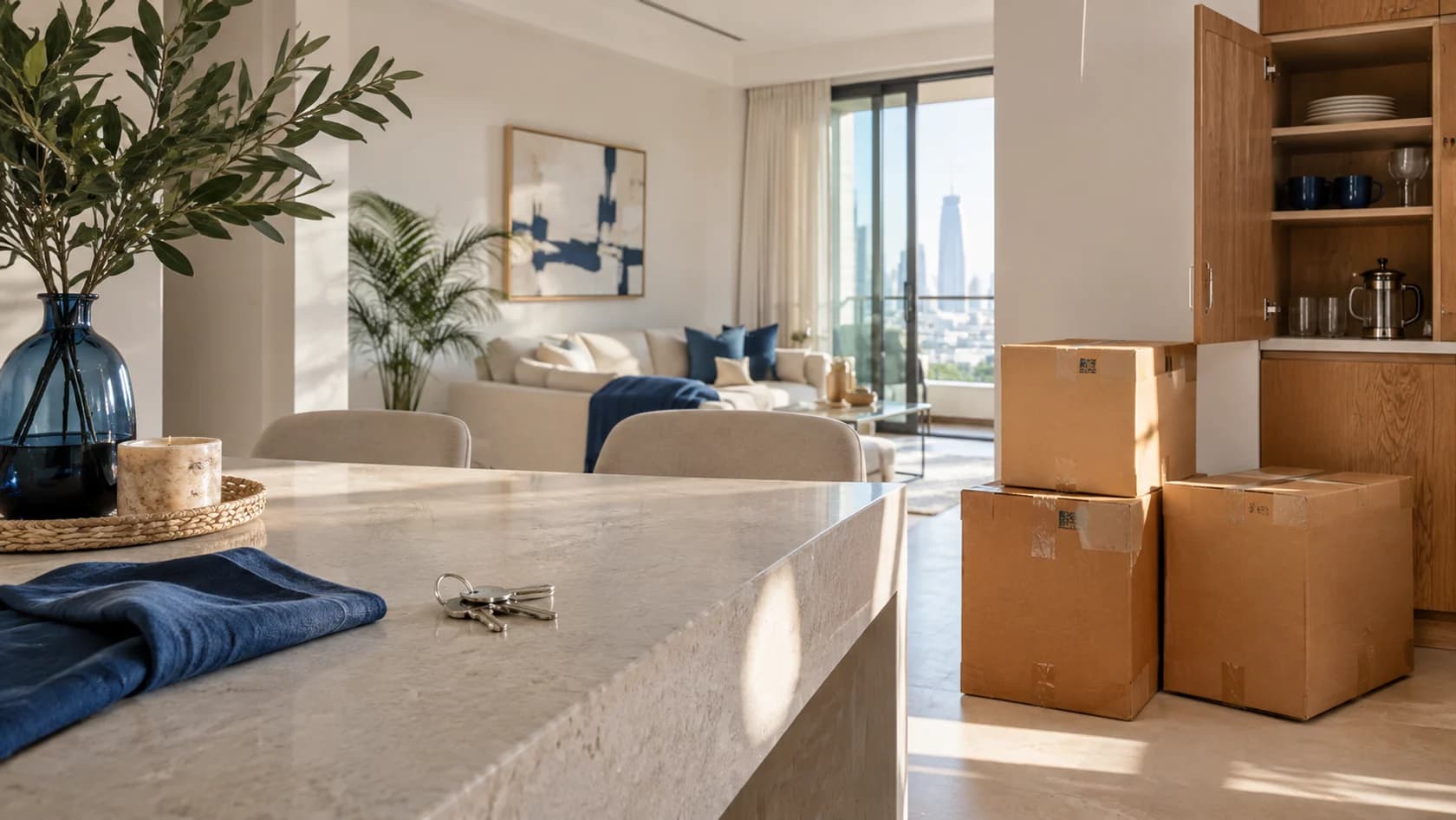
The easiest time to clean the inside of a cupboard is before it holds your plates. Yet moving day has a way of filling every room before the cleaning has started. If you can arrange access before the furniture arrives, give the empty home a deliberate first pass.
Three steps: clean empty storage, finish kitchen and baths, and do floors before unpacking.
Walk through once with your phone and a notebook
Photograph the condition of each room and make two lists: cleaning and repairs. Dust on a shelf belongs on the cleaning list. A dripping tap, damaged socket or damp patch needs a different conversation. Send property issues to the relevant owner or manager rather than asking a cleaner to hide them.
Check that water and electricity are available for the agreed work, and confirm access, parking and any lift restrictions. A team arriving with equipment cannot solve a locked building entrance from the pavement. Keep your own first-day essentials in a separate bag so they do not get mixed into cleaning supplies.
Start with empty storage
Work through kitchen cupboards, wardrobes and accessible shelves before filling them. Follow the care guidance for the material, and allow cleaned surfaces to dry before replacing shelf liners or storing belongings. Avoid soaking cabinet edges or treating every finish as if it were tile.
Use this moment to decide where things will go. Keeping one cupboard empty for supplies is easier now than after the kitchen has been unpacked. Label any shelf or surface that needs a repair so it does not disappear under a stack of boxes.
Give the kitchen and bathrooms a defined scope
In the kitchen, name the counters, sink, cupboard interiors and appliance surfaces you want cleaned. Inside an oven or refrigerator is a separate task that should be agreed beforehand. Follow appliance instructions, and do not ask a cleaner to move a heavy connected appliance or dismantle it to reach behind.
For bathrooms, list the basin, toilet, shower area and accessible surfaces. If there is persistent dampness or suspected mould, arrange an assessment of the cause instead of assuming a stronger cleaner will solve it. Keep bathroom tools separate from kitchen tools.
Use products as labelled, with the required ventilation, and never mix them. The CDC's cleaning guidance explains that ordinary cleaning and disinfection are different jobs. A move-in service should state what it includes rather than promise an undefined “sterile home.”
Leave floors until the other work is finished
Do the accessible higher surfaces first, then the lower ones, with floors at the end. Choose the floor method for the actual material. Do not assume marble, wood and ceramic tile can all take the same product or amount of water. Keep freshly cleaned routes clear until they are ready to walk on.
If furniture has already arrived, agree which pieces can be moved safely and which areas will remain inaccessible. A realistic scope is more useful than an “every corner” promise that nobody has checked.
Send this brief before booking
- Number of rooms and bathrooms, plus whether the property is empty.
- Cupboard interiors and appliance interiors required.
- Floor and worktop materials, where known.
- Any remaining renovation dust, paint spots or adhesive residue.
- Who provides equipment and products.
- Access arrangements and the time furniture is due to arrive.
Renovation residue may need a different service from a normal move-in clean. Describe it accurately and send photos rather than expecting standard cleaning to cover scraping or specialist treatment.
Finish with a walkthrough before unpacking: open cupboards, check agreed areas, and note anything missed. Check the available services on Tasko and use the service-visit preparation guide to make the appointment easier to organise.