How to clean after a dusty day without doing every room twice
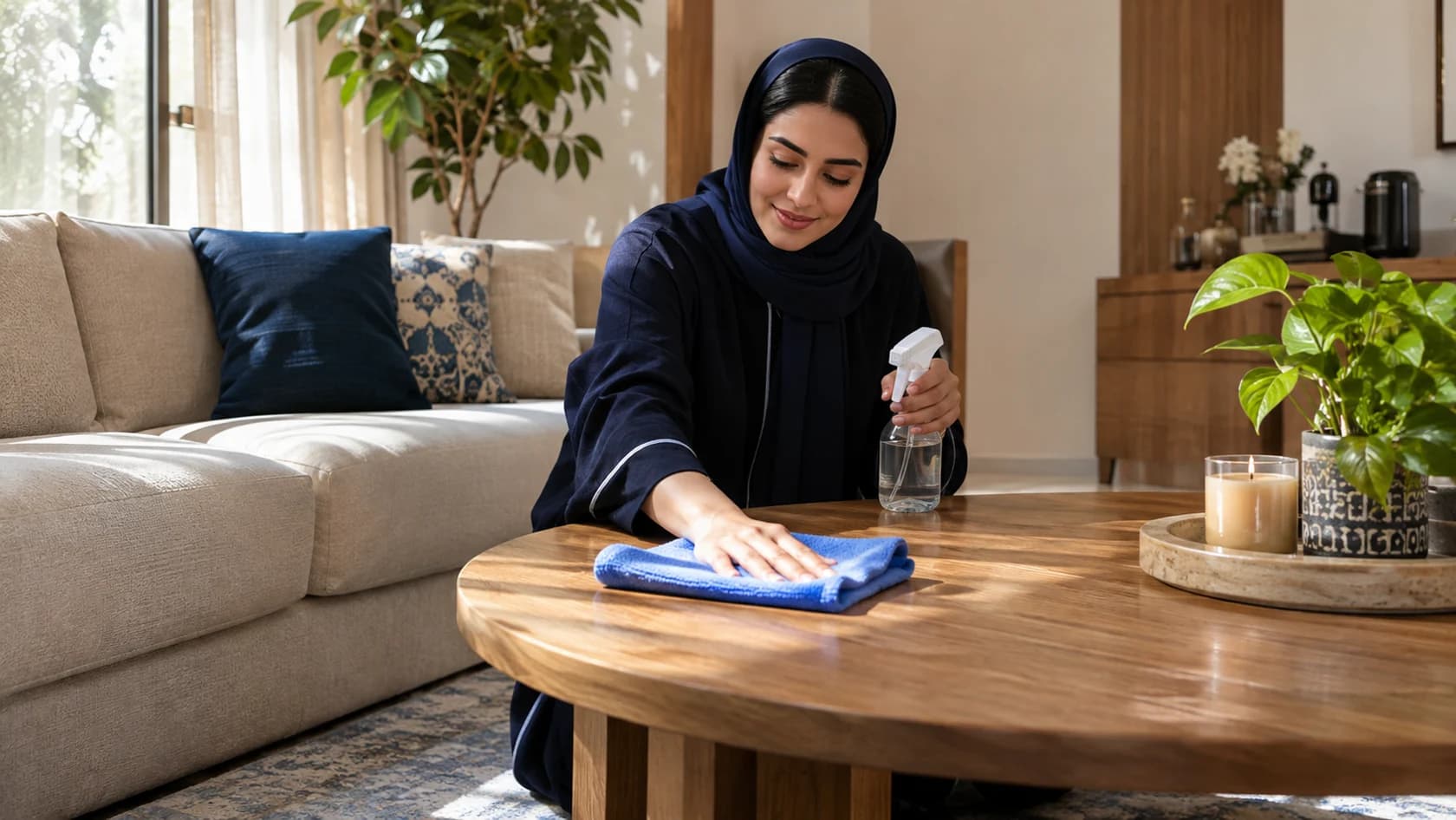
You wipe the coffee table, turn around, and notice a dusty shelf above it. Then the floor needs doing again. After a dusty day, the order of the work matters as much as the amount you do. Start with one room and finish it before carrying supplies through the whole home.
Three steps: clear the surfaces, work from top to bottom, and finish with floors.
Decide what actually needs attention
Walk through the rooms you use most. Check the entrance, window ledges, tables, open shelves and exposed fabrics. A closed bedroom may need very little while a living room near a frequently opened balcony door needs more time. Write down the priority rooms rather than automatically booking a whole-home deep clean.
Keep windows closed while outdoor dust is still blowing in. When using cleaning products, follow their ventilation instructions and choose a suitable time and safe way to ventilate. Do not keep cleaning in a poorly ventilated room if a product requires fresh air.
Clear a small area before wiping
Move cups, toys and loose papers off one surface at a time. Put items in a basket instead of moving the same pile from table to sofa to floor. Set aside anything that needs a different cleaning method: a laptop, a leather bag, an unfinished wood ornament or a framed photograph.
Use the surface manufacturer's care instructions to choose a cloth and product. A lightly dampened cloth may suit some sealed surfaces, but “more water” is not a universal solution. Follow separate care guidance for electronics and delicate finishes. Avoid spraying liquid directly onto switches, sockets or screens.
Work from higher surfaces to lower ones
Start with safely reachable shelves, then tables and lower furniture. Fold the cloth so you can turn to a clean section. Change or rinse it when it starts leaving marks. Keep bathroom cloths separate from those used on kitchen surfaces.
Leave high ledges and heavy furniture for someone with suitable equipment. Standing on a sofa arm to reach the top of a cabinet turns a routine clean into a poor bargain. If a spot is outside safe reach, add it to the service brief.
Give fabrics their own pass
Check care labels before cleaning sofa covers, cushions or curtains. Vacuum suitable soft furnishings with the appropriate attachment; wash removable covers only if the care instructions allow it. Finish floors after the furniture so you do not have to repeat them.
The CDC's home-cleaning guidance recommends products suitable for the surface and following manufacturers' instructions for fabrics and electronics. Never mix cleaning products. Everyday dust removal does not require a stronger chemical mixture.
Use a simple finishing check
- Entrance and window ledges checked.
- Open shelves and tables wiped with suitable materials.
- Fabric care labels checked before treatment.
- Floors completed after the surfaces above them.
- Used cloths separated for washing and supplies put away.
Before putting everything back, look across the room in daylight. It is easier to spot a missed tabletop edge now than after replacing every ornament. Keep the result realistic: cleaning removes the dust present; it cannot promise that outdoor dust will never return.
If you are booking a cleaner
Name the rooms and the tasks. “Living room, entrance and two bedrooms; shelves, accessible window ledges and floors; no curtain washing” gives a clearer starting point than “clean everything.” Mention delicate materials and any high areas. Ask whether equipment, products and moving furniture are included before confirming the scope.
Browse Tasko's current services to check the available options. If you have just received the keys to a property, use the move-in cleaning checklist to separate cleaning work from repairs.