Sofa cleaning: check the care label before booking
A sofa can look ready for a thorough wash after months of everyday use. But before anyone arrives with a machine, find out what its upholstery actually allows. A care label, a few clear photographs and a description of the marks can help you arrange a suitable clean. Start with the fabric instructions, whether the sofa sits in the family living room or a guest sitting room used less often.
Find the care label, share clear photos, and agree on the cleaning method and drying plan before work starts.
Find the care information before choosing a method
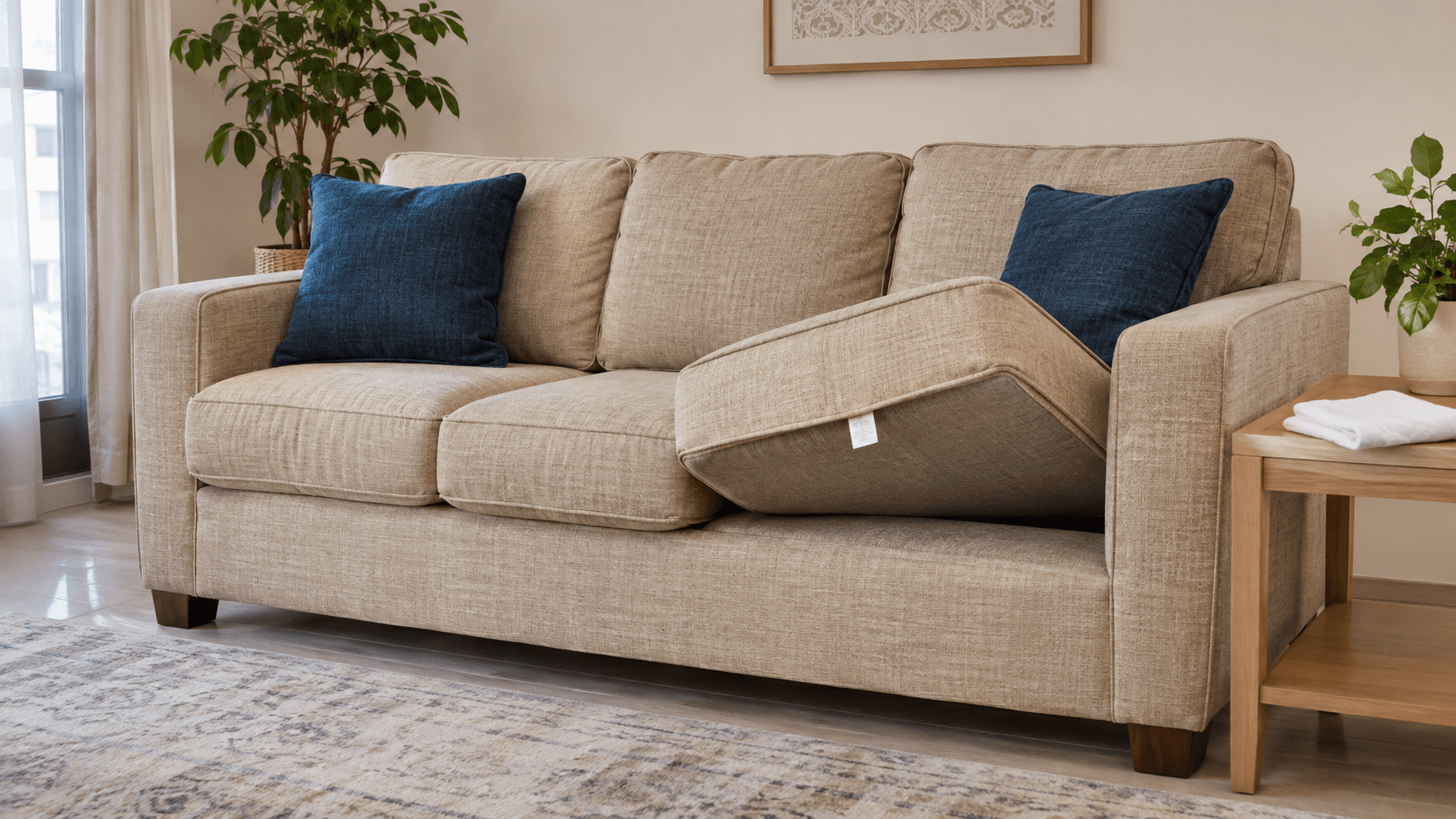
Look for an accessible label beneath a loose seat cushion, or check the furniture paperwork and the maker's product page. Do not tip a heavy sofa or reach into a reclining mechanism just to find a tag. If you cannot locate it safely, send the retailer a photograph and the model or order number.
Photograph the whole label rather than copying one letter. Keep the fabric name, product reference and any separate instructions together. If the sofa was reupholstered, ask the upholsterer about the current fabric; paperwork for the original covering may no longer answer the question. Loose scatter cushions can have their own care instructions too.
Understand the code without treating it as a recipe
Ashley's furniture-care guide explains these common upholstery codes:
- W: water-based upholstery shampoo or foam, without overwetting.
- S: a suitable dry-cleaning solvent; no water.
- WS or SW: specified upholstery shampoo, foam or suitable solvent for spot cleaning.
- X: vacuuming or light brushing only; no water-based or solvent cleaner.
These are general code meanings, not instructions to choose a household chemical. Your furniture manufacturer's full directions take priority. If the label is missing, unclear or uses another system, ask for clarification before agreeing to a method. A sofa's colour or apparent fabric texture is not enough information to select one.
Ask specifically about steam, extraction and cushion covers
Do not assume a W code approves every wet-cleaning machine. For its W upholstery, La-Z-Boy's care instructions advise against hot-water extraction or steam cleaning and against removing cushion covers for laundering. Check what your own maker says. A zip alone does not establish that a cover can go into the washing machine.
Ask the cleaner to explain the proposed process in plain language. Will it be a surface treatment, spot cleaning or something else? Which parts are included? Ask how the care instructions will be followed and whether a discreet test is required. Resolve any uncertainty before products touch the upholstery.
Describe each mark and what has already been tried
Take one photograph of the entire sofa and closer photographs of the affected areas in ordinary daylight. Mention whether you know what caused a mark and roughly when it appeared. “Coffee spilled last week” is useful if it is true; “unknown mark on the left arm” is useful too. There is no need to guess.
List any products already applied, including stain removers, soap or sprays, and share the packaging if available. Point out old water rings, faded areas, loose seams or worn patches so they can be discussed separately. Ask which marks the cleaner expects to improve and which may remain. Avoid planning around a promise that every stain will disappear.
Agree on the room arrangements and drying plan
Before the appointment, confirm the number of seats, separate chairs, loose cushions and any matching footstool. If your household says “the whole sitting room,” turn that into a list of actual pieces. Include stairs, narrow doorways and any access restrictions that could affect the visit.
Move small ornaments and personal items yourself where practical, and agree who will move larger furniture. Ask what room conditions are needed during the work and afterwards. Obtain an estimated drying time for the proposed method and a clear instruction on when the sofa can be used again. Plan another place to sit, especially if the family uses this room throughout the day.
Send a request that leaves room for assessment
Example request: “One three-seat fabric sofa and two loose cushions. The care label is attached. There is an unknown mark on one arm and a coffee mark on a seat. Please confirm a suitable cleaning method, what is included and the drying arrangements before starting.” Change those details to match your own furniture.
For the wider room, our cleaning-after-dust guide helps you plan the order of the other jobs. When you are ready to arrange help, check the services currently available on Tasko and share the label and photographs with your request. Keep the agreed scope and care instructions for the next clean.