Water under the sink? A useful checklist before calling a plumber
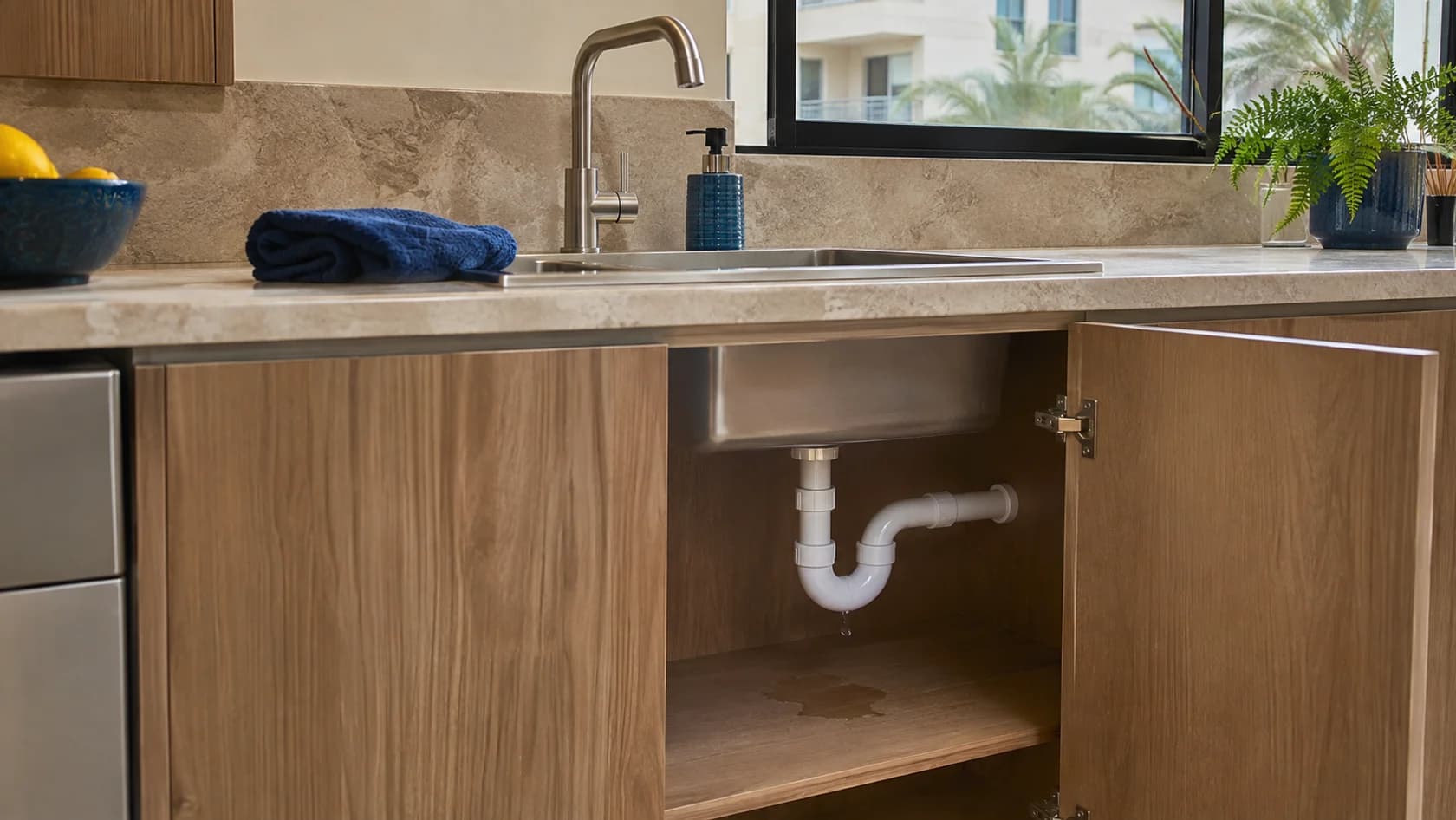
A damp cupboard under the sink is easy to miss until a packet or cleaning cloth comes out wet. The first job is to protect the area and work out what you can observe safely. Tightening random fittings is not a useful first step, especially when you cannot see where the water starts.
Three steps: check access is safe, photograph the wet area, and describe when it happens.
Make the area safe before investigating
Keep children and pets away from a wet floor. Move stored items only if the area is safe to approach. If water is close to sockets, appliances or exposed wiring, stay clear and get professional help. Do not touch electrical equipment while standing in water.
If a clearly identified, accessible water shutoff can be operated safely, it may help limit an active leak. Do not force a stiff valve or turn shared building valves at random. In an apartment, tell the building manager if the leak appears to involve a shared pipe or another property.
Write down where and when the water appears
Take one wide photo showing the cupboard and one closer photo of the visible wet area. Avoid including personal paperwork in the frame. If it is safe, note whether the moisture is already present before the tap is used or appears during normal use. Do not run more water just to reproduce a large leak.
- Which fixture is involved: kitchen sink, basin, toilet or another point?
- Is the visible water clear, discoloured or accompanied by an unusual smell?
- Is the cupboard base wet, or is a pipe visibly dripping?
- Does the patch return after being dried?
- Was any plumbing work done recently?
These are clues, not a diagnosis. A wet patch may have travelled from a point you cannot see. Avoid promising the technician that a particular washer is the only problem.
A meter check can add a clue, with limits
The EPA's household leak guide suggests comparing meter readings across two hours when no water is used. A changing reading can indicate a leak. That comparison only helps if you know what the meter serves and can account for other water use.
In a property with a storage tank, automatic filling, irrigation or a shared supply, movement may have another explanation. Ask the building manager or plumber how your system is arranged. A stationary meter also does not rule out every intermittent fault. Photograph the reading and time rather than trying to interpret unfamiliar plumbing on your own.
Send a short, specific request
Example request: “Water is collecting in the kitchen sink cupboard. I noticed it yesterday and the patch has returned. The visible drain connection looks wet, but I cannot identify the source. Photos are attached. Please inspect the cause and confirm the proposed repair and price before additional work.”
Tell the professional if access is narrow, a cupboard needs emptying, or the building requires a visit slot. If you rent, check your reporting arrangement with the property manager before authorising changes to the property. This is a coordination step, not a statement about who must pay.
Keep a record of the repair
Ask what failed and whether anything else needs watching. After the repair, have the plumber demonstrate normal operation and check the previously wet area. Keep the invoice and a photo of the finished work. A cabinet that remains damp may need attention even after the source has been fixed.
For a routine inspection or repair, check Tasko's available services. A rapidly spreading leak or water near electrics needs prompt local assistance; do not leave it running while waiting for a routine appointment.