AC not cooling well? What to check before a service visit
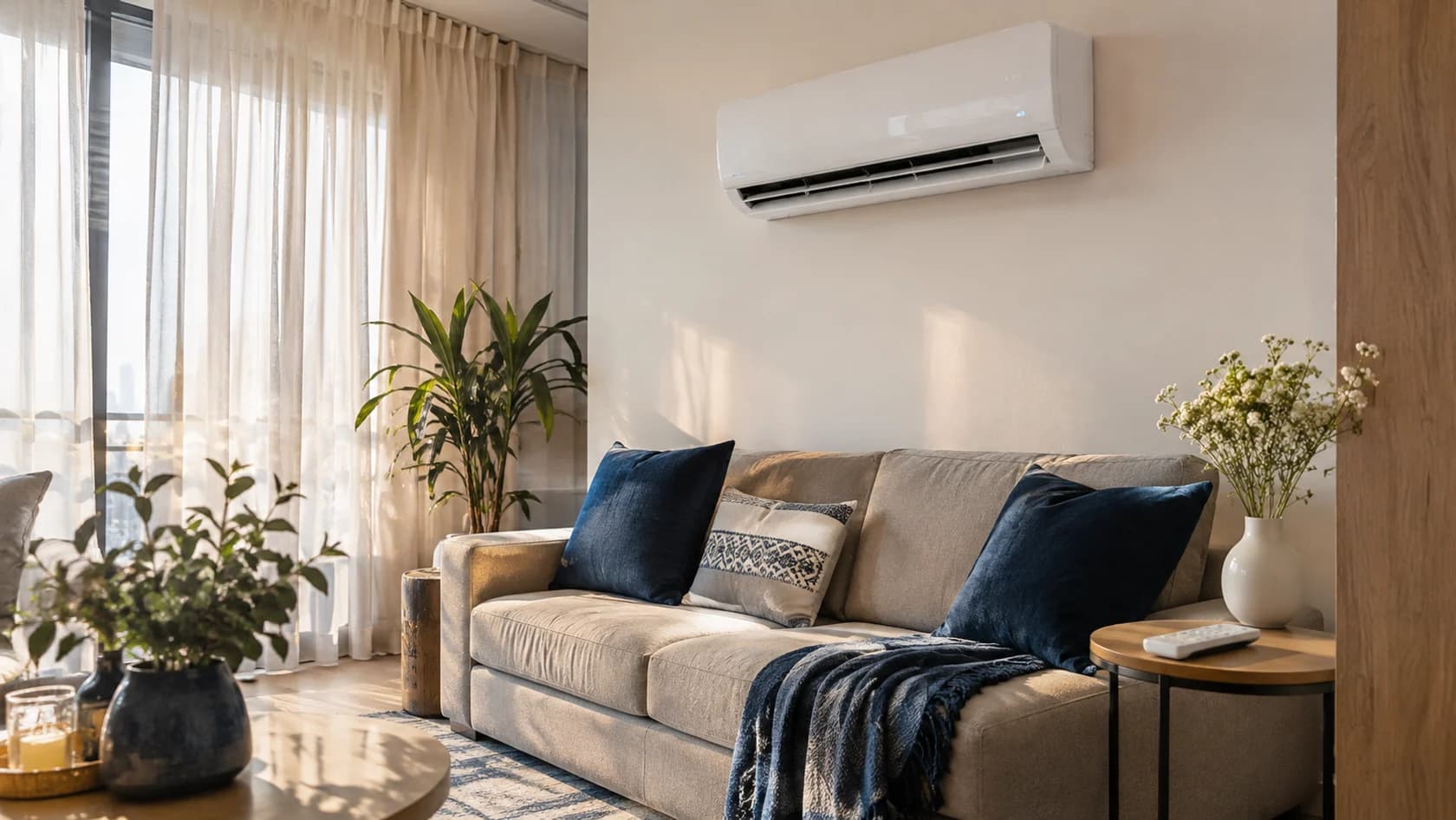
The AC is running, the remote says cool, and the room still feels warm. Before you book a visit, spend a few minutes checking what is happening. A useful description can save the technician from starting with a vague “it does not work.” You do not need to take the unit apart.
Three steps: check the settings, record the symptoms, and arrange an inspection.
Start with the remote and the room
Check that the unit is in cooling mode rather than fan-only mode. Remote symbols vary, so use the manual if a symbol is unfamiliar. Make sure the selected temperature is below the room temperature. If someone recently changed a timer or sleep setting, note that too.
Look around the room. Is a balcony door open? Is a curtain covering the indoor unit? Has a tall cupboard been placed in front of an air outlet? Clear ordinary obstructions without reaching inside the unit. Keep the conditions steady while you observe it; changing several settings at once makes the problem harder to describe.
Check the filter only as the manual allows
Filter care belongs on the checklist. The US Department of Energy's heating and cooling guide recommends regular filter care and consulting the owner's manual. Follow your model's instructions for cleaning or replacement. Do not assume every filter is washable.
Switch off and isolate the unit as instructed before handling a user-accessible filter. If safe access requires climbing onto furniture, opening a screwed panel, or reaching near wiring, leave it to a technician. This is an observation checklist, not a repair guide.
Describe the symptom, not the repair you think it needs
“Please refill the gas” names a treatment before anyone has diagnosed the fault. A more useful request describes the behaviour: weak airflow, air that feels warm, cooling that stops after a while, water indoors, or an unusual sound. Several different faults can look similar from the sofa.
- Does the problem affect one room or several?
- Did it start suddenly or become noticeable gradually?
- Does the display show an error code?
- When was the unit last serviced, if you know?
- Is water appearing inside the room?
Take a photo of any displayed code before switching the unit off. Record a short video of an intermittent noise from a safe distance. Do not climb outside or onto a roof to film the outdoor unit.
Make the visit easier to plan
Send the unit type, the room, and a picture of the model label if it is accessible. Mention whether the outdoor unit is on a balcony, roof, or an external ledge. Access arrangements matter, especially in an apartment building where a caretaker may need to open a locked area.
Example request: “Bedroom split AC. Airflow feels weaker than usual and the room stays warm in cooling mode. It started three days ago. No error code is visible. The outdoor unit is on an accessible balcony. Please diagnose the cause and explain any additional work before starting it.”
When to stop checking
If you notice smoke, a burning smell, repeated breaker trips, or water near electrical parts, stop using the unit. Switch it off only if you can do so safely and arrange professional help. Do not repeatedly reset a breaker or open electrical covers.
Before the technician leaves, ask what was found, what work was completed, and what care your specific unit needs next. Keep that note with the model number. If you are ready to arrange a visit, check the services currently available on Tasko and include your observations in the request.