Before mopping: match the cleaner to your floor
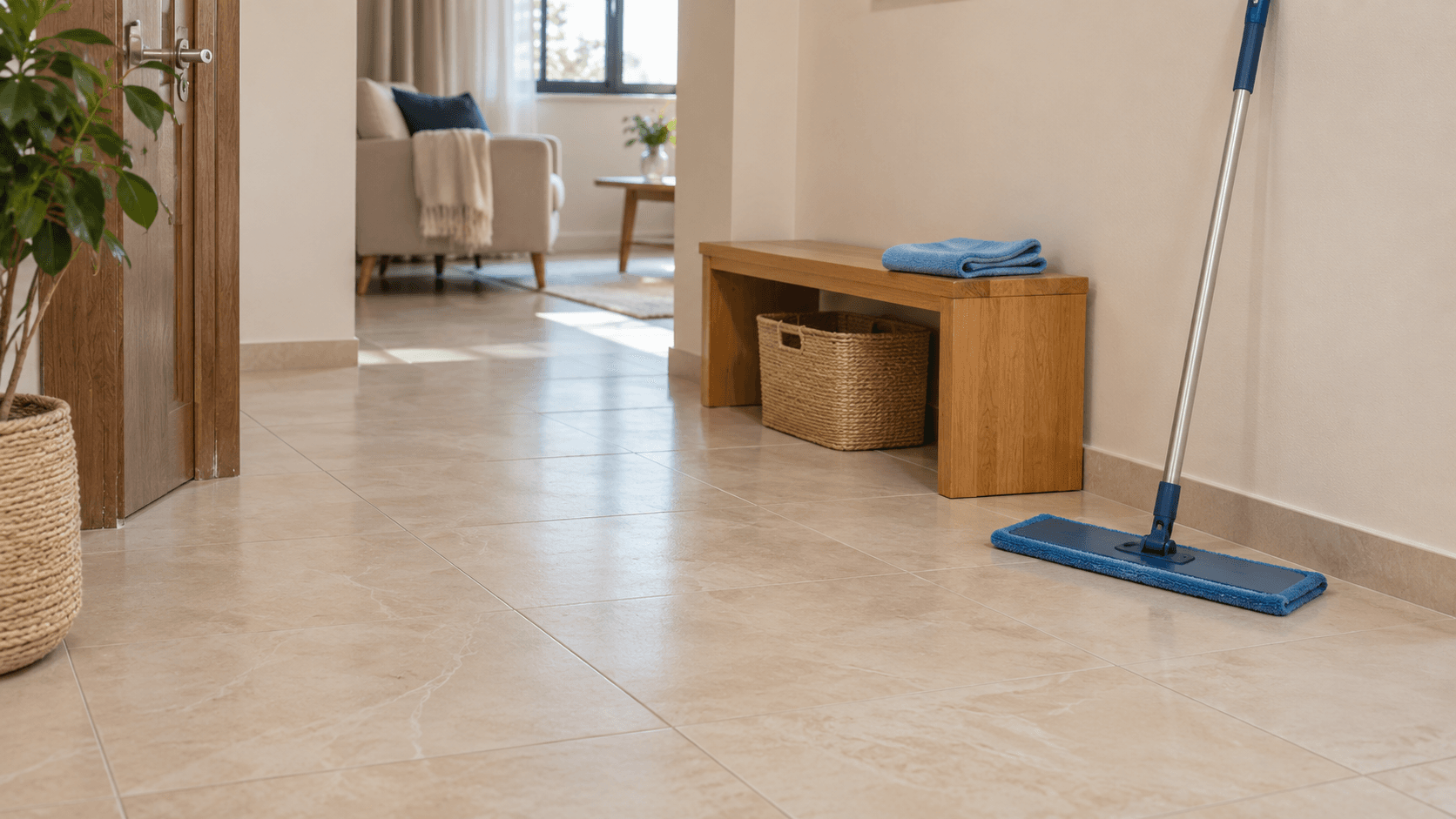
A bottle that works well on the kitchen floor may not be the right choice for the entrance or sitting room. Before the next mop, check what each surface actually is and what its care instructions allow. This matters especially when a home combines natural stone, ceramic or porcelain tile, and other finishes that look similar from a distance.
Identify the surface, choose an approved cleaner, and follow the floor and product care instructions.
Give each floor a name you can check
Start with purchase records, a spare tile box, the installer's paperwork or information from the property owner. Record the product name and finish for each room. “Beige marble-looking floor” is a useful description for a photograph, but it does not establish whether the material is natural marble, porcelain or something else.
If the information is missing, ask the supplier or installer for help identifying it before trying a new chemical. Take an overall photograph and a closer view of the surface and joints. Mention any known sealer, polish or coating. Keep uncertain areas separate in your cleaning plan instead of assuming that every room can use the same bottle and tool.
Keep acidic recipes away from marble care
The Natural Stone Institute's care guide warns that lemon, vinegar and other acids can dull or etch calcareous stone such as marble. It recommends neutral cleaners for stone care and notes that too much cleaner can leave film or streaks. Use a product approved for your stone and finish, following its directions.
When someone suggests a homemade recipe, ask whether it is compatible with the actual surface. A familiar kitchen ingredient is still a cleaning substance with material limits. If you have already used something and noticed a change, keep the packaging or recipe details and photograph the area. Pause further experiments while you seek appropriate advice.
Check tile and grout instructions together
Marazzi's tile-care guidance says most glazed porcelain and ceramic tiles can be cleaned with water or a pH-neutral liquid cleaner. It also directs readers to the grout manufacturer's instructions and warns that abrasive materials can scratch tiles. Treat that as a starting point for checking your particular installation, including any coating or special finish.
Save the tile and grout information together. If one room has been repaired or regrouted, note which area changed. When buying a cleaner, check the listed compatible surfaces and exclusions rather than choosing by fragrance or the photograph on the front. Ask the supplier about any conflict between the cleaner label and the floor's care sheet before using it.
Measure the product as the label requires
Read whether the product is ready to use or needs dilution, what tools it allows, and whether it requires rinsing. Use the stated measuring method. A capful is only a reliable measure when the instructions actually specify that cap. Keep the original labelled container so everyone helping at home can check the same directions.
Use the approved product on its own as directed. CDC guidance warns against mixing bleach or disinfectants with other cleaners, because dangerous vapours can result. Do not add another product to a partly filled bucket. Follow the chosen label's ventilation and protective-equipment instructions as well as its surface restrictions.
Set up a small, manageable cleaning route
Clear small objects from the floor and plan where you will finish, leaving a dry route for the household. Keep children and pets out of the working area. Remove loose grit with a surface-appropriate method first; the Natural Stone Institute identifies sand and grit as abrasive to stone. Check your cleaning tool's pad and attachments before starting.
Work with the amount of moisture and the method allowed by your flooring instructions. Keep a clean pad available and replace dirty cleaning or rinse water as the relevant directions require. Avoid rushing from a bathroom into another room without checking whether the same product, pad and routine are suitable there. Decide that before the mop is already wet.
Separate everyday cleaning from a surface problem
If a patch stays dull, scratched or discoloured, record where it is and what has been used on it. Do not keep increasing the cleaner strength or move to an abrasive pad simply because the first pass did not change the mark. Ask the supplier or an appropriate floor-care professional to assess it before agreeing to polishing, sealing or other treatment.
Example service note: “The entrance floor product is listed in the attached paperwork. There is a dull patch near the door; the current cleaner and photos are attached. Please confirm a compatible method and explain whether this is routine cleaning or a separate surface issue.” Our cleaning-after-dust guide helps plan the other rooms. You can also check the services currently available on Tasko if you need help.