Buying a split AC in Saudi Arabia? Check the label and installation
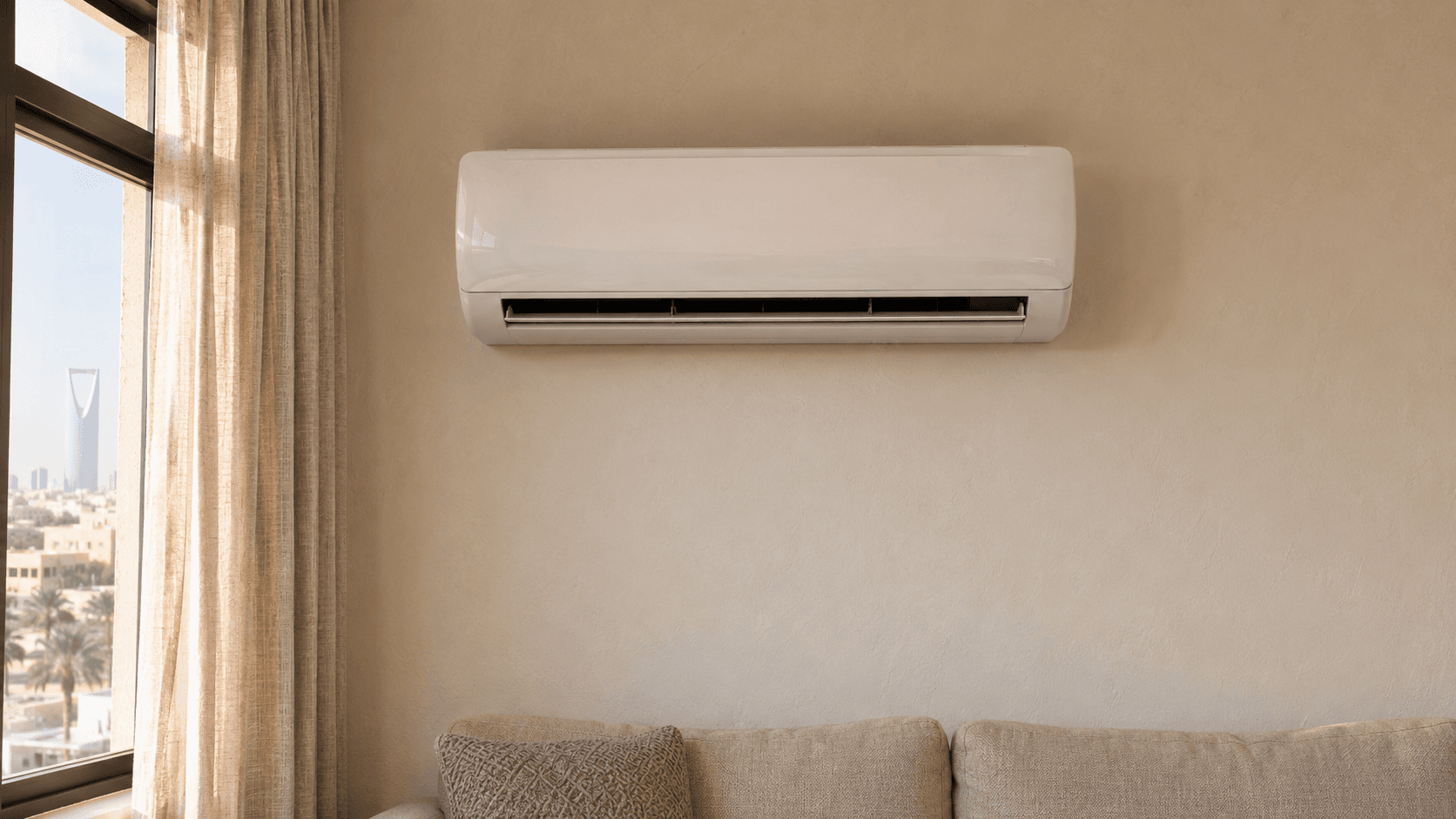
A split AC can look like a good deal on the product page and turn into a different job once the installer sees the apartment. Maybe the balcony has no suitable spot for the outdoor unit, or the old line runs farther than the quote allows. Start with two questions: does this exact model suit the room, and what will it take to fit it here?
Verify the energy label for the exact model, get the room assessed if you’re unsure about size, and agree on the installation scope before paying.
What changes in Saudi Arabia this December?
In its published rollout plan, the Saudi Standards, Metrology and Quality Organization (SASO) lists 1 December 2026 as the start of enforcement at customs and local manufacturers for its updated air conditioner efficiency standards. One of those standards, SASO 2663:2025, covers low-capacity window and single-split models. The same plan says products already in the Saudi market remain subject to the licenses and certificates previously issued for them. The date is a reason to verify the model you’re buying, not a deadline to replace the AC you already use. See SASO’s rollout slides and FAQ.
Check the label for the exact model
Ask the seller for the full model number and a clear photo of its Saudi energy label. Scan the QR code in SASO’s Ta’akad app, or use the app’s search if the code isn’t available. Match the model number and annual energy consumption to the label. If the listing covers several sizes or the label and the app disagree, ask the seller to clear it up before you pay.
Compare efficiency and annual energy consumption across units that meet the same cooling need. Use annual consumption as a comparison figure. Your actual use will depend on how you run the unit and the room it’s cooling.
Pick a capacity for the room you actually use
Measure the room and note the ceiling height, big windows, direct afternoon sun and any opening into adjoining rooms. Two rooms with the same floor area can have different cooling needs. A bedroom with one shaded window and a sitting room that opens into the kitchen are different jobs. If you’re between sizes, have a professional assess the space. Samsung Saudi Arabia’s buying guide also recommends taking layout, insulation and sunlight into account.
Show the installer both sides of the job
From a safe spot, take a wide photo of the proposed indoor wall and another of the available outdoor area. If there’s an old split unit, show where its pipes and drain run where visible. Ask the installer to check where the new unit can drain, whether the outdoor unit can be reached for later service, and whether the existing electrical supply and line route suit the exact model.
An existing hole in the wall helps you show the route, but the installer still needs to decide whether they can reuse it. Leave the electrical and refrigerant checks to the professional. For a rental or shared building, check with the owner or building manager before agreeing to exterior work or drilling.
Get the installation scope in writing
Ask what the quote includes for pipe length, a bracket or stand, drain routing, wall openings and removal of the old unit. Ask who handles any separate electrical work and what needs to be agreed before extra work starts. One useful question is, “If you can’t reuse the old pipe route, will you confirm the new route and quote with me before you start?”
If you’ve picked your unit, view Tasko’s split AC installation listing and check that the listed capacity and scope match your model and site.
Ask for a short handover
Before the installer leaves, ask them to show the controls and confirm the unit runs and drains as intended. Save the model number, invoice, warranty details and service contact together. If you’re deciding whether to replace an AC that still runs but has lost cooling, start with our checks for an AC that isn’t cooling.